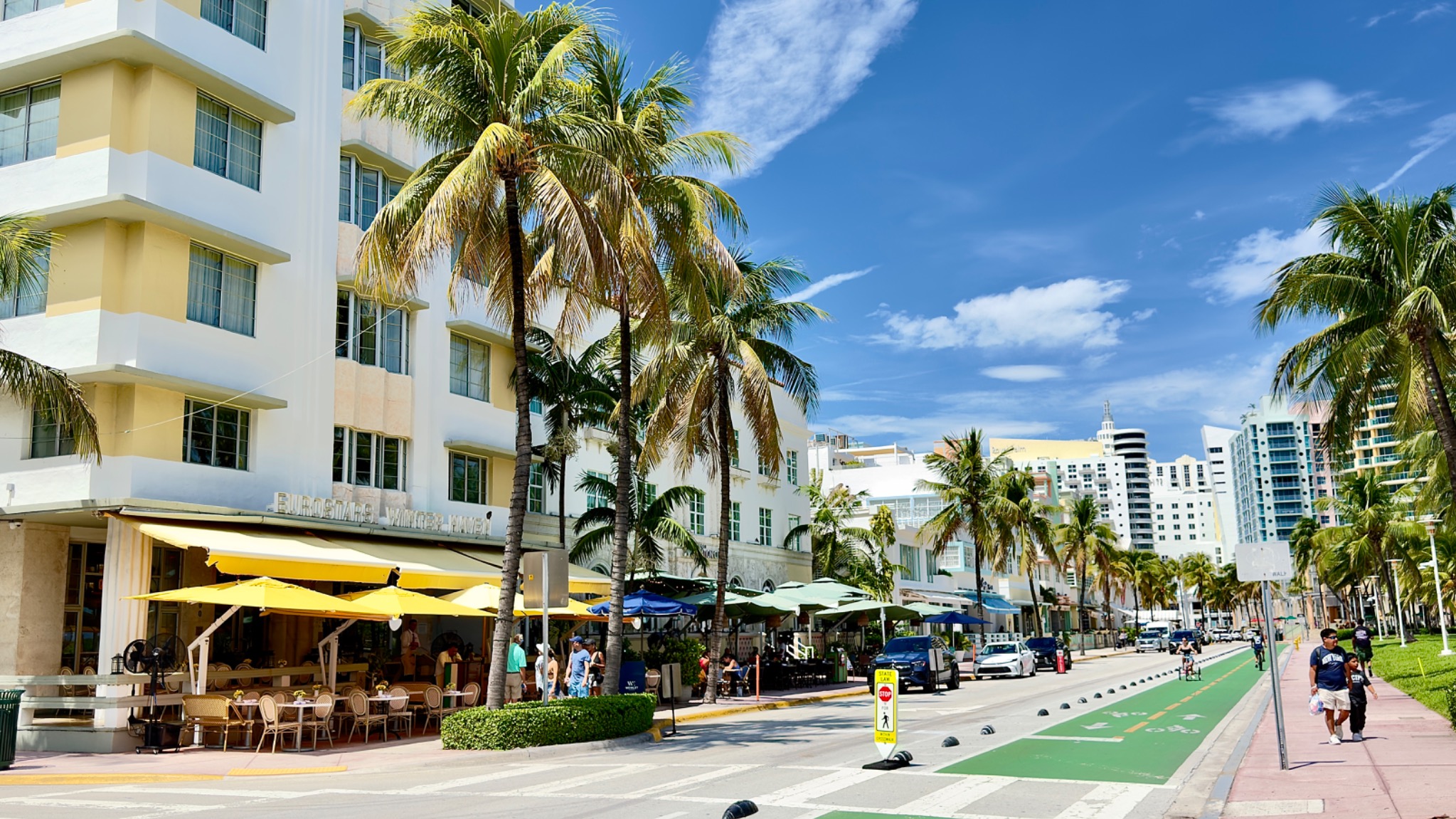
This week, hotel owners, operators, designers and suppliers will gather at the Miami Beach Convention Center for Independent Hotel Show Miami, taking place September 16–17, 2026.
Outside the convention center, they will be standing in the middle of one of the most interesting hospitality investment cycles in the country.
Miami Beach is not simply adding rooms. Existing hotels are being repositioned, luxury flags are changing, historic properties are being redeveloped and independent properties are attracting serious capital.
That can create an uncomfortable question for smaller operators:
How is an independent hotel supposed to compete when the property down the street is spending tens or hundreds of millions of dollars?
The answer is not to enter the same spending contest.
It is to become harder to substitute.
The investment around Miami Beach is real
The former W South Beach closed its hotel operation in August ahead of a transformation into Waldorf Astoria South Beach. The planned renovation includes 348 redesigned oceanfront guest suites, upgraded dining, an enhanced spa and fitness center, work on the 48,000-square-foot pool deck and refreshed event space. The property is expected to reopen in 2027.
That project sits inside a broader Collins Avenue reinvestment cycle. The Real Deal reported that the Delano reopened following an upgrade costing more than $100 million, while Shelborne South Beach reopened after a roughly $100 million renovation. Other recognizable properties along Collins Avenue have also been undergoing major repositioning.
At the independent end of the market, the signal is just as interesting.
On September 8, IPA Capital Markets announced a $75.1 million mid-construction recapitalization for The Monroe Hotel, an 89-key luxury boutique property being redeveloped in the Faena District. The project's reported total cost is $125.5 million, with plans that include suites, a full-service restaurant and bar, rooftop venue, recording studio, pool deck, beach service, spa and fitness facilities.
Circa 39 Miami Beach is also preparing for a comprehensive repositioning as part of IHG's Vignette Collection, with work scheduled to begin in the third quarter of 2026.
The message is difficult to miss:
Capital believes Miami Beach hospitality still has room to become more valuable.
But that does not mean every independent operator should respond by trying to become more expensive, more elaborate or more like a luxury flag.
The guest does not know what your renovation cost
Hotel owners live with capital expenditure.
Guests live with perception.
Those are very different worlds.
A guest walking into a property on Collins Avenue generally does not know whether the lobby renovation cost $2 million or $20 million.
They notice something simpler.
Does this place feel current?
Does arrival feel considered?
Does the experience resemble what they were promised online?
Can they quickly understand what makes this property different from the one next door?
And most importantly:
Does the experience feel worth what they are being asked to pay?
That is where an independent property can still compete.
Capital can create extraordinary physical environments. It does not automatically create clarity, personality or trust.
Every major renovation raises the comparison set
There is another consequence of Miami Beach's investment cycle.
Every strong new or renovated property teaches the guest what to expect from the destination.
A guest who experiences a polished arrival, thoughtful food-and-beverage concept, strong pre-arrival communication or well-orchestrated pool experience does not erase those expectations when they enter an independent hotel two blocks away.
The comparison follows them.
That means independent hotels are no longer competing only against properties of similar size or category.
They are competing against the standard of experience the destination itself is teaching guests to expect.
That is a more demanding contest.
It is also one that smaller operators can win.
Trying to match the giants dollar for dollar is the wrong strategy
An 80-room independent hotel will not beat a global luxury flag by behaving like a smaller version of that flag.
Nor should it try.
Independence is valuable because it permits something large organizations often struggle to deliver consistently:
specificity.
An independent hotel can know exactly who it is for.
Its website can sound like the property instead of a corporate template.
Its arrival experience can feel personal rather than procedural.
Its neighborhood recommendations can come from people who actually know the neighborhood.
Its general manager can notice friction on Wednesday and change the experience on Thursday.
Its history, architecture, team and location can become part of a coherent story rather than separate marketing assets.
That agility is not a consolation prize.
It is an operating advantage.
But only if the guest can see it.
The independent hotel problem often begins before check-in
Spend enough time reviewing hotel websites and a strange pattern emerges.
Properties with distinctive architecture, interesting histories, unusual owners and memorable on-property experiences often present themselves online almost identically.
Rooms.
Amenities.
Pool.
Restaurant.
Fitness.
Beach.
Book now.
A traveler searching Miami Beach can encounter a dozen very different hotels that somehow sound almost interchangeable online.
That is where independent value starts disappearing.
Before arrival.
Before the lobby.
Before an employee ever has the chance to deliver exceptional service.
The guest has to choose first.
If the digital experience does not make the difference obvious, price, location, loyalty programs and OTAs become increasingly powerful decision makers.
That is not merely a marketing problem.
It is a guest-experience problem occurring before the guest arrives.
The promise and the property have to agree
The strongest independent properties should be able to draw a straight line through the guest journey:
Discovery → consideration → direct booking → pre-arrival → arrival → stay → departure → return.
The story should not change at every stage.
If the website promises intimate local hospitality but arrival feels anonymous, there is a gap.
If the photography communicates quiet sophistication while the property actually operates as a social, energetic environment, there is a gap.
If guests have an exceptional stay but the direct-booking experience creates enough uncertainty that they return to an OTA, there is a gap.
If employees routinely create memorable moments that never appear anywhere in the property's digital story, there is an opportunity.
Independent hotels should be competing in those gaps.
Not in a marble-buying contest.
Miami Beach's reinvestment is an opportunity, not a warning
Major investment in Miami Beach should not frighten independent operators.
It validates the destination.
The Waldorf Astoria transformation, the return of the Delano, the Shelborne repositioning, The Monroe redevelopment and other projects represent substantial confidence in Miami Beach hospitality.
Even Lincoln Road is being reconsidered around walkability, smaller storefronts, public spaces and reasons for locals and visitors to spend more time there.
Money is betting that people will continue wanting Miami Beach.
That creates opportunity for everybody operating here.
But it also removes an old luxury:
the ability to rely on Miami Beach itself as the differentiator.
Being near the ocean is geography.
Art Deco architecture is an asset.
Independent ownership is a structure.
None of those automatically explains why a particular guest should choose one property over another.
The question operators should bring into the show
Independent Hotel Show Miami will put operators in front of technology, design, amenities, services and new ideas for running better hotels.
Before deciding what to buy, add or replace, there is a more important question worth answering:
Where does our guest experience actually lose strength today?
Is it discovery?
Is it direct booking?
Is it pre-arrival?
Is it the first ten minutes on property?
Is there a gap between what leadership believes the hotel represents and what the guest actually encounters?
Technology applied to the wrong problem simply makes the wrong problem more sophisticated.
A beautiful renovation attached to an unclear proposition creates a more expensive unclear proposition.
Independent does not mean smaller
It means less constrained.
The major brands transforming Miami Beach have resources most independents will never match.
Independent hotels have another advantage when they choose to use it:
the ability to know precisely who they are and build the guest journey around that answer.
Miami Beach will likely become more competitive over the next several years.
More capital.
More luxury.
More polished experiences.
More choice.
The property that wins will not necessarily be the newest or the one that spent the most.
It may simply be the hotel that makes a guest understand, faster and more convincingly than everybody else:
This is why you belong here.
And in an increasingly expensive hospitality market, clarity may prove to be one of the most valuable luxuries an independent hotel can offer.
Sources: Independent Hotel Show; The Real Deal; Hotel Business; Hospitality Net. Reporting accessed September 2026.
